There have been a few articles and
snippets on the Mises Blog about Batman, but most are about the Batman
Chronicles issue where German Batman saves Ludwig von Mises's library — this
just goes to show that I'm not the only student of Austrian economics who's a
recovering comic-book nerd — though there is a short and sweet review of Batman
Begins by Joe Salerno and a well-thought, in-depth analysis of The Dark Knight
by Jeffrey Tucker. Let this article be the corresponding piece to The Dark
Knight Rises.
One of the remarkable things about this
Batman series is the way Hollywood — a bastion of tired, often-rehashed,
leftist propaganda — has unwittingly allowed an obscenely wealthy capitalist
who lives a decadent bourgeois lifestyle (when not fighting crime) to be the hero!
It was noted somewhere that Murray Rothbard was a fan of the James Bond films
partly because Bond was unrepentantly bourgeois and knew how to live it up in
style. I think Rothbard — who has forgotten more about Austro-libertarianism
than I could ever hope to learn in my lifetime — would have liked Christian
Bale's portrayal of Bruce Wayne, neither afraid to make large investments nor
afraid to be seen driving the ladies around in his European sports cars.
Another thing about Bruce Wayne/Batman
is that he's a shining example of what can be accomplished by the private
sector. None of Wayne's state-of-the-art technology is sponsored by government
grants, though there would be little doubt Wayne Enterprises sells to the
government. Nonetheless, Wayne's research is fueled by his own profits, not
government grants or subsidies, and with the help of his top man, Lucius Fox,
he develops the technology that enables him to be an effective one-man army and
fight organized crime that borders on terrorism, while responsibly avoiding the
corruption of the military-industrial complex.
Jeffrey Tucker was correct to note that
the mob's extensive operations and violence (as well as law enforcement often
turning a blind eye) are fueled by prohibition — that is, government
intervention — much the way Prohibition fueled the gang wars and the rise of
organized crime in the 1920s. The utopian idea held by leftists and
neoconservatives alike…
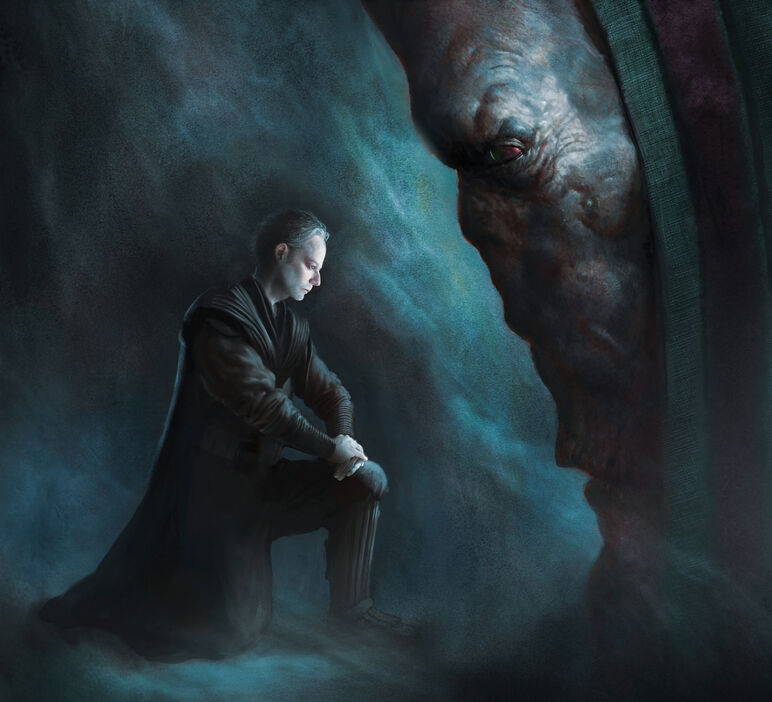
Darth
Plagueis was a dark lord of the Sith so powerful and so wise, he could… even
keep the ones he cared about from dying…The dark side of the Force is a pathway to many abilities, some
considered to be unnatural.He became so
powerful, the only thing he was afraid of was losing his power.
After much disappointment expressed by
the public over the quality and substance of the Prequel Trilogy—grudgingly
accepted by diehard fans—comes a novel to save the day and save the prequels,
especially Episodes I and II.James
Luceno’s Darth Plagueis excellently
brings together the seemingly scattered events of the prequels to not only tie
up loose ends, but also offers greater understanding of these films and a
greater appreciation of the Star Wars storyline.Better yet, Darth Plagueis is a novel that could speak volumes on behalf of the
Austrian School!
Let it be clear that this is unlike most
Star Wars novels.It isn’t
action-packed, but rather philosophical, explaining the teachings of the Sith,
the logic for and against the Rule of Two, and the Grand Plan for the revenge
of the Sith.Much like The Count of Monte Christo, Darth
Plagueis uses politics, deception, and intrigue to move the plot forward over a
chronological span of several decades.
The novel also answers some pressing
questions, including why Darth Maul was killed by a padawan and not a Jedi
Master.Another is how and where Count
Dooku came into the picture, his frustrations with the weakening Republic, how
he would have become a Sith Lord, and why Dark Jedi are leaping out of every
nook and cranny while the Rule of Two is still in effect.Some of the glimpses of the growing military
industrial complex give insights on the development of the technology used by
the Trade Federation, the Intergalactic Banking Clan, and the Techno Union
which not only would make the droid army possible, but also the cyborg
technology used to revive General Grievous and eventually Darth Vader.The novel even covers the open ends made in The Clone Wars series, including Darth
Maul having a brother and a psycho godmother.
Rest assured that this article contains
some major spoilers, but critical for the brief analysis that must be included
in this book review.Darth Plagueis,
known to his business associates as Hego Damask, is a seldom-known figure who
mostly operates and does his transactions behind closed doors and out of the
limelight, yet is one of the most powerful beings in the galaxy.He is personally responsible for setting in
motion the chain of events that would lead to the rise of the Empire under
Palpatine.
Damask, Majister (both CEO and head of
state) of the clandestine financial group Damask Holdings, follows the Muun species’
tradition of banking, finance, and acquisition of as much power as possible
through the purchasing or seizure of assets, from accounts and properties to
big businesses and even whole planets.
Damask is a secret ally of the
Intergalactic Banking Clan (the Star Wars version of the Federal Reserve),
responsible not only for growing the military industrial complex, instigating the
breakup of the Republic and the rise of the Empire, but also for selling
weapons and financing both sides in the Clone Wars.One of the members of Damask Holdings, Larsh
Hill, is Chairman of the IBC and will eventually be succeeded by his son San
(seen in Episodes II and III as IBC Chairman and influential leader in Dooku’s
Confederacy of Independent Systems).After Larsh’s death, San Hill would be personally mentored by Hego
Damask.
Wookieepedia—now recognized as a
reliable authority by StarWars.com—says the following about Damask Holdings:[2]
Damask Holdings was a clandestine
financial group closely allied to the Intergalactic Banking Clan, which also
acted as a lobbying and political pressure organization that involved itself in
the affairs of many planets, both to exploit local resources—such as plasma—for
financial gain, and to gain influence on a galactic scale as part of the secret
Sith Grand Plan to topple the Galactic Republic. It also operated as a secret
society, bringing together the galaxy's most influential beings for the yearly
gatherings on Sojourn, and also presiding over the steering committee.
Case closed!If Hego Damask can be compared to J.P.
Morgan, then the Hills are the Rockefellers, the world Sojourn being Jekyll
Island[3]
and Damask Holdings being the first Federal Reserve Board, using the IBC and
satellite firms like the Trade Federation to tighten their hold over the
Republic, secure a future for the military industrial complex, and maintain
their full monopoly on the control of trade, finance, and unbalanced government
regulations.
Damask, however, is much shrewder in his
schemes and dealings than J.P. Morgan, though Morgan’s co-founding of the Fed
and agitation to involve the United States in the First World War (to protect
his European investments) makes him no amateur thug.Damask recruits as his Sith apprentice an
ambitious young man from Naboo named Palpatine, simultaneously training him in
the ways of the dark side of the Force and grooming him to become an
influential Galactic Senator.Their
methods are to acquire all the power necessary for undermining the Republic,
Damask’s grand plan involving Palpatine acquiring political power and the reins
of government, meanwhile himself acquiring increasing economic power through
Damask Holdings and the IBC.Furthermore, Damask obsessively studies the nature of life, the Force,
and Midi-chlorians in the hopes of achieving immortality so that Plagueis and
Sidious may forever reign as emperors.
This example is part of why your author
respectfully disagrees with the neo-Rothbardian view that government is evil
and everything that is good lies in privatization.(No, this is not because Rothbard hated Star
Wars…)After all, it’s possible for
thugs to control whole sections of the private sector and rule as dictators in
an anarcho-capitalist society just like the public sector in a socialistic
society, whereas in a Constitutional society with minimal, localized government
and abundant, decentralized privatization there lies far less opportunity for
the stripping of rights and increase of corruption through monopolies and
absolute power.
Nonetheless, we live in a world where
the same group of thugs seem to rule large sections of both the public and
private sectors, just as the Order of the Sith Lords secretly does during the
final years of the Republic.The
worldview of the Sith Lords is not different at all from the one held by contemporary
policy makers in America, from the Federal Reserve Board of Governors to the U.S.
Congress and the Executive Branch, their thoughts and actions completely
antithetical to the ideals and principles of the Constitution, the free market,
and individual liberty.During training
Plagueis says to Sidious, “With the Republic [the Jedi] are like indulgent
parents, allowing their offspring to experiment with choices without
consequence, and supporting wrong-headedness merely for the sake of maintaining
family unity… When instead they should be claiming: We know what’s best for you.”[4]
Video used via standard YouTube distribution license. Image is the
property of Random House Publishing Group and Lucasfilm but used via
Wookieepedia according to the fair use provision of U.S. copyright law.
[3] Rothbard, Murray N.The Origins of the Federal Reserve. The
Ludwig von Mises Institute. 2009. p. 93.
<http://mises.org/document/6119/The-Origins-of-the-Federal-Reserve>
[4] Luceno, James. Star Wars: Darth
Plaqueis. Del Rey, Random House Publishing Group. 2012. pp. 166-67.
There are times when pure theory becomes
too abstract for a student of the Austrian School, and concrete examples are
needed to solidify understanding of the stupid greed or false philanthropy of
policy makers who seek to "protect" the American people.Well, see the info-graphic to the left!
Here’s a graph showing just a taste of
the overlap between Goldman Sachs corporate lobbyists/officials and federal
government officials.Remember folks,
these are the people writing regulations to reign in those “greedy
capitalists”—i.e., their competitors.
Instead of competing to produce the best
goods or services to win over consumers, they’re using the law in an
unconstitutional manner to give themselves an artificial advantage and fat
profits and slant the playing field for everyone else.
Under a truly free market, they would
have to compete honestly.The naturally
occurring phenomenon of the free market would require them to offer goods
or services of the highest quality—with a correspondingly high price—or of the
lowest price—with correspondingly low quality—or find a healthy balance between
quality and low price that makes goods and services universally affordable and
with good utility.
One economic insight to keep in mind this
election cycle is that both Barack Obama and Mitt Romney are in the pockets of
Goldman Sachs, both having received substantial donations from members of the
Goldman Sachs executive board.Ron Paul
is not in anyone's pocket, disavows crony capitalism, and is Washington D.C.'s
greatest advocate of the free market.
One of the problems in the common
mindset is that people see crony capitalism and grievously mistake it for the
free market.Clearly there is a
difference; the former, wedded to interventionism and eventually socialism, causes
society and economy to decay, while the latter enables them to thrive.
For those knowledgeable nerds who are well-versed in Star Wars expanded universe history (such as your author), they would be familiar with the lore of the Great Hyperspace War.Originally appearing in the Tales of the Jedi comic book series and being mentioned throughout the Knights of the Old Republic game, this particular conflict is part of ancient Star Wars history, having been fought five thousand years before the time of Luke Skywalker.
This conflict began when some gold diggers waist-deep in debt decided to try their luck at finding new paths for hyperspace travel that could become lucrative trade routes and solve their financial woes.What originally happened was that, after dialing random coordinates and hoping to get lucky, the traveling pair of get-rich-quick schemers accidentally stumbled upon the Sith planet of Korriban and the entire Sith Empire, previously ignorant of the existence of the Galactic Republic and vice versa.
This immediately led to the Sith using the newly-discovered hyperspace route (and subsequently discovered coordinates) to attack Republic worlds.For the rest of the war, the Republic and the Sith Empire struggled for domination of the hyperspace routes while trying to conquer each other’s’ worlds for imperial expansion.The Republic eventually won, resulting in the near-annhilation of the Sith Empire and the exile of the Sith Lord Naga Sadow to the planet Yavin 4, but this would only be one in a series of wars between the Republic with its light-side Jedi and the Sith with their dark Jedi.
These episodes are not unlike ancient history here on earth.The Punic Wars, fought between the Greek Carthaginians and the Romans between 264 and 146 BC (nearly one hundred and twenty years!) were waged specifically for land holdings, particularly islands in the Mediterranean, and for control of waterways for trade routes.Furthermore, long before Rome fought Carthage, the Trojan War became the stuff of legends.While mythology romanticizes the war to have been fought over a beautiful woman, historians and archaeologists today agree that the most likely cause for the war would have been trade routes.
Austrian economists know that all such calamity and bloodshed could have been avoided through economic cooperation rather than isolationism.Just because countries or empires trade with each other does not guarantee that they don’t adopt isolationist measures.Whether it’s the Greeks battling the Romans or the British battling the French, it seems impossible for nations to simply share the waterways.After all, 75% of planet Earth is covered by ocean, and there’s enough water on the well-traveled trade routes for ships not to crash into each other.Still, with the existence of empires comes the need for as much prestige and as many displays of dominance as possible.The “chosen” empire must have full control of the trade routes and take the liberty to tax any vessel and cargo, leaving little if any market competition.
Even when not trying to dominate a market competitor militarily, international competitors still try to dominate the market through protectionist laws, tariffs, and other taxes.Unfortunately, such a travesty is all too common today.In order to “protect” American industry, big businesses lobby the federal government to set high tariffs and fees on imported goods.This invariably makes the price of imported goods shoot sky high, since the foreign producers now have to pay the exorbitant tax on top of the cost of shipping their products internationally.While this maintains the illusion of protecting the American economy, it causes more harm than good.Because the market has been violated by protectionist interventionism, prices are raised artificially (but the higher cost for goods and services is all too real for the poor consumer whose purchasing power is shrinking).These high prices naturally serve as false indicators in the market and cause domestic producers to raise their prices as such.
These phony prices in no way indicate the actual cost of producing the goods, the way a free market would allow, and manipulating the prices for protectionist purposes harms consumers by making goods more expensive.The quality of products also drops because domestic producers no longer have to constantly compete with their foreign competitors.In the end, the American consumer is paying more money for lower quality goods, not necessarily because of some “greedy capitalist” but because government intervention enabled that greed.The free market is about competition and survival of the fittest, in order to provide the consumer with the best quality product for the lowest possible price.Author Kel Kelly writes in his book The Case for Legalizing Capitalism, “Don’t buy American, buy what’s best…”:
Intentionally buying only American goods when one would otherwise choose foreign products keeps American workers employed—temporarily—in jobs where they are producing goods which should be produced by other countries, while their labor would be more beneficial in another line of work. Because of this, there are fewer total goods produced and lower real salaries for both the laborers and the consumers.
To elaborate on Kelly’s point, consumers tend to buy more expensive and lower quality products far less often.This leads to an overall decline in revenue for producers, causing them either to go under, or to prevent going under by having to cut their budget through cutting all workers’ hours or by eliminating jobs (in which labor is being wasted when other countries should be producing those items so that local labor can better produce other items).
For those less-than-diehard Star Wars fans who insist that anything not in the six movies doesn’t count, they can witness this political-economic travesty of protectionism in Episode I: The Phantom Menace.
Continued in Part II: The Invasion of Naboo
Image by the author. Background taken from a NASA photo which is in the public domain.
Star Wars is unquestionably a brilliant saga that touches the hearts of many through its incorporation of timeless literary archetypes and humanist themes.Adventure, love, loss, spirituality, good vs. evil, and the triumph of the human (and humanoid) spirit...
Yet there are other characteristics standing out that demand attention and respect, such as the saga’s inclusion of patterns of history (great wars and economic or political disasters) and of the interactions and exchanges of societies and individuals.One could practically point to passages from Mises’ Human Action or Theory and History while watching any given Star Wars episode!
Everyone knows the basic storyline that spans six episodes and numerous television and novel tie-ins.A once prosperous and peaceful republic decays over time from corruption and then war.Victory over secessionists in a great galactic war only serves to undermine the Republic’s ideals of liberty and hastens its demise and overt reorganization into the Galactic Empire.Following two decades of imperial rule and repression, a guerrilla army dedicated to reestablishing the Republic and maintaining its founding principles of liberty fights a lengthy campaign, pursuing only the help of willing parties, eventually destroying the Empire and restoring republican democracy to the galaxy.
While the whole republican democracy vs. imperial rule theme is incredibly broad and universal, there are a number of factors that tug on the heart strings of any Austrian economists.The saga begins with the Trade Federation, involved in a dispute over taxing trade routes, launching a blockade of the planet Naboo.This is unquestionably an aggressive action inflicted on a sovereign people for the purpose of maintaining protectionist taxes and other economic interventionism—a crime not only against a sovereign people but also a violation of the free market.
Throughout the Clone Wars, part of the C.I.S. (Separatist) war effort is paid for by Trade Federation revenues, as well as profits generated by the Intergalactic Banking Clan (secretly controlled by the emperor-to-be Palpatine).Can anyone say Intergalactic Federal Reserve?At the same time, the Republic’s war effort is paid for by inflation by its own central bank, and probably also by raising taxes on Republic member worlds.
The end of the Clone Wars is met the rise of the Empire and Darth Vader—warnings of what happens when great leaders and great societies sacrifice their principles under an end-justifies-the-means mentality and invariably become what they originally set out to fight against.In order to carry out the Wilsonian fantasy of “making the world [err, galaxy] safe for democracy” the Republic had to become an Empire, a threshold from which there was no return.
Then comes the Rebel Alliance, a coalition resembling that of thirteen autonomous states during the American Revolutionary War, fighting the Empire so that the Republic and its Constitution could be restored.This Republic would be one that respects individual rights and the self-determination of worlds.What did the Rebels give to the galaxy? “A republic, if you can keep it” (Benjamin Franklin).
Across the journey the audience is introduced to fascinating commercial centers.Two such places, radically different from each other, are Coruscant and Tatooine.Corsuscant and its booming skyscrapers represent the hustle and bustle of Wall Street, while the desert spaceports of Tatooine are a haven for the black market—some would call the black market the free market.Whatever drugs, technology, equipment, and other goods are off the market where the Republicrigidly enforces its prohibitionist and protectionist laws can easily be obtained in the unregulated bazaars of Tatooine—for the right price of course.There’s a whole galaxy thriving with exchanges and movement and all sorts of human and humanoid action to explore!
Let this serve as an introduction to a series of glimpses into the Star Wars universe through the eyes of an Austrian economist.Feel free to come along for the ride, and may the Force be with you.
 By Zach Foster