Showing posts with label Democratic Party. Show all posts

Tuesday, November 29, 2011

Thomas Jefferson's Free-Market Economics

By Murray N. Rothbard
 
Thomas Jefferson (1743–1826) had been a friend and admirer of the philosophes and ideologues since the 1780s when he served as minister to France. When the ideologues achieved some political power in the consular years of Napoleon, Jefferson was made a member of the "brain trust" Institut National in 1801. The ideologues — Cabanis, DuPont, Volney, Say, and de Tracy — all sent Jefferson their manuscripts and received encouragement in return. After he finished the Commentary on Montesquieu, de Tracy sent the manuscript to Jefferson and asked him to have it translated into English. Jefferson enthusiastically translated some of it himself, and then had the translation finished and published by the Philadelphia newspaper publisher William Duane. In this way, the Commentary appeared in English (1811), eight years before it could be published in France. When Jefferson sent the published translation to de Tracy, the delighted philosopher was inspired to finish his Traité de la volonté and sent it quickly to Jefferson, urging him to translate that volume.
 
Jefferson was highly enthusiastic about the Traité. Even though he himself had done much to prepare the way for war with Great Britain in 1812, Jefferson was disillusioned by the public debt, high taxation, government spending, flood of paper money, and burgeoning of privileged bank monopolies that accompanied the war. He had concluded that his beloved Democratic-Republican Party had actually adopted the economic policies of the despised Hamiltonian federalists, and de Tracy's bitter attack on these policies prodded Jefferson to try to get the Traité translated into English. Jefferson gave the new manuscript to Duane again, but the latter went bankrupt, and Jefferson then revised the faulty English translation Duane had commissioned. Finally, the translation was published as the Treatise on Political Economy, in 1818.
 
Former President John Adams, whose ultra-hard-money and 100 percent-specie-banking views were close to Jefferson's, hailed the de Tracy Treatise as the best book on economics yet published. He particularly… (Read more) ​
 
Source: Mises.org

Monday, November 21, 2011

In Case You Missed It: Ron Paul Makes Statement on Super Committee

“This shows how unserious politicians are about our very serious debt problems”
 
LAKE JACKSON, Texas – 2012 Republican Presidential candidate Ron Paul released a statement today regarding the congressional Super Committee’s failure to meet its goal with the deadline fast approaching. See below for statement.
 
“This week marks the deadline for the so-called congressional Super Committee to meet its goal of cutting a laughably small amount of federal spending over the next decade.  In fact the Committee merely needs to cut about $120 billion annually from the federal budget over the next 10 years to meet its modest goals, but even this paltry amount has produced hand-wringing and hysteria on Capitol Hill.  This is only cutting proposed increases.  It has nothing to do with actually cutting anything.  This shows how unserious politicians are about our very serious debt problems.
 
“To be fair, however, in one sense members of the Super Committee face an impossible task.  They must, in effect, cut government spending without first addressing the role of government in our society.  They must continue to insist the federal government can provide Social Security, Medicare, and Medicaid benefits in the future as promised, while maintaining our wildly interventionist foreign policy.  Yet everyone knows this is a lie.
 
“Keep in mind that the 2011 federal deficit alone was about $1.3 trillion, which means the Super Committee needs to cut that much PER YEAR rather than over a 10 year period.  If Congress ever hopes to address its debt problem, it must first stop accumulating any new debt immediately, in 2012.
 
“Federal revenue likely will be about $2.3 trillion in fiscal 2012.  The 2004 federal budget was about $2.3 trillion.  So Congress simply needs to adopt the 2004 budget next year and the federal government will balance outlays and revenue.  That’s all it would take to produce a balanced budget right now.  Was the federal government really too small just 7 years ago, in 2004?  Of course not.  Only Washington hysteria would have us believe otherwise.
 
“Yet our Republican and Democrat friends on the Super Committee want to take 10 years, or even 30 years, to produce a balanced budget.
 
“Government spending isn’t just wasteful; it is often actively harmful to stated goals.  The Super Committee could simply apply 2004 spending levels across the board and a tremendous victory for fiscal sanity would be accomplished.
 
“What seems more likely, however, is a rearrangement of the tax code in an attempt to bring in more revenue.  Deductions and credits will be taken away, and the Bush tax cuts will be allowed to expire.  As a result, less money will remain in the private sector to create jobs and produce economic growth.  The Super Committee has an opportunity to take a small baby step in the right direction.  Instead, they no doubt will take this opportunity to raise taxes and make everything worse.  But increasing taxes will only diminish freedom and deepen the recession.  Instead of looking for ways to hike taxes under the guise of “raising revenue,” the Super Committee should put forth a plan of real spending cuts to put America back on the path to liberty and prosperity.”

Saturday, September 10, 2011

Here's how the American Jobs Act works

Good afternoon,

Last night President Obama walked Congress and the nation through the American Jobs Act, his plan to create jobs in America now. It's up to Congress to act on this set of bipartisan ideas that put people back to work and put more money into the pockets of working Americans.

You can watch a special enhanced version of the speech, featuring charts and other relevant information here.

Here are a few important points about how the American Jobs Act works, and why Congress should act quickly:

·         First, it provides a tax cut for small businesses, not big corporations, to help them hire and expand now and provides an additional tax cut to any business that increases wages.
·         Second, it puts people back to work, including teachers, first responders and veterans coming back from Iraq and Afghanistan, and construction workers repairing crumbling bridges, roads and more than 35,000 public schools, with projects chosen by need and impact, not earmarks and politics.
·         Third, it helps out-of-work Americans by extending unemployment benefits to help them support their families while looking for work and reforming the system with training programs that build real skills, connect to real jobs and help the long-term unemployed.
·         Fourth, it puts more money in the pockets of working and middle class Americans by cutting in half the payroll tax that comes out of every worker's paycheck, saving families an average of $1,500 a year. And it removes the barriers that exist in the current federal refinancing program (HARP) to help more Americans refinance their mortgages at historically low rates, save money and stay in their homes.

The American Jobs Act is based on ideas supported by both Democrats and Republicans, and is fully paid for by closing corporate tax loopholes and by asking the wealthiest Americans to pay their fair share. It would have an immediate impact on job and economic growth, but Congress has to act now.

You can learn more about the American Jobs Act on Whitehouse.gov.

Over the next few days there are a number of ways for you to ask questions and engage with Administration officials about the American Jobs Act including Open for Questions live panels and Twitter Office Hours.

In fact, next week, I’ll be participating in my very first White House Office Hours on Twitter, so be sure to tune in and send me your questions using the hashtag #WHChat.

Sincerely,

David Plouffe
Senior Advisor to the President

P.S. After last night’s address, a few White House policy experts answered questions about the speech. Check out the video of the event at WhiteHouse.gov/JobsSpeechOFQ.

VIDEO: American Jobs Act: Get the Facts

By Colleen Curtis


This evening, the President addressed a joint session of Congress and presented the American Jobs Act, a comprehensive plan to put America back to work. It was created from a set of ideas supported by both Democrats and Republicans, and it acknowledges that if we are going to restore America's middle class, we need to rebuild the economy the American way, based on balance, fairness and the same set of rules for everyone from Wall Street to Main Street.

Viewers who tuned in to watch it live-streamed from whitehouse.gov/live got an enhanced experience, one that included real time graphic elements that explained the research and the facts that helped inform some of aspects of the American Jobs Act. And now you can watch it that way, too.

You can download the fact sheet here.

Wednesday, August 3, 2011

THE TRUTH ABOUT THE DEBT DEAL: It’s Pretty Much Meaningless

By Zeke Miller

The "historic, bipartisan compromise" reached to raise the debt limit does not end the struggle to reign in the federal deficit — in fact, it pushes the most difficult decisions off into the future.
More surprising, the debt deal actually cuts almost nothing now--it just promises future cuts that may or may not materialize.

There are very few specific cuts in the deal — and the $1 trillion in immediate cuts are almost entirely constituted of caps on future spending. And those caps are not required to be honored by future congresses.

The "real" spending cuts to current programs will come out of a bipartisan committee of Representatives and Senators, which is charged with finding an additional $1.5 trillion in savings from the federal deficit.

But White House and Republican leaders appear split on exactly what the so-called "Super Committee" can do.

In a presentation to his caucus, Speaker of the House John Boehner said it would "be effectively...impossible for [the] Joint Committee to increase taxes," even though it could consider reforming the tax code... (Read on)

Source: Constitution Party

Thursday, July 21, 2011

No, Your Money Isn't Safe

By Zach Foster
Best read with companion article No, We're Still Not Protected

The companion article stated:

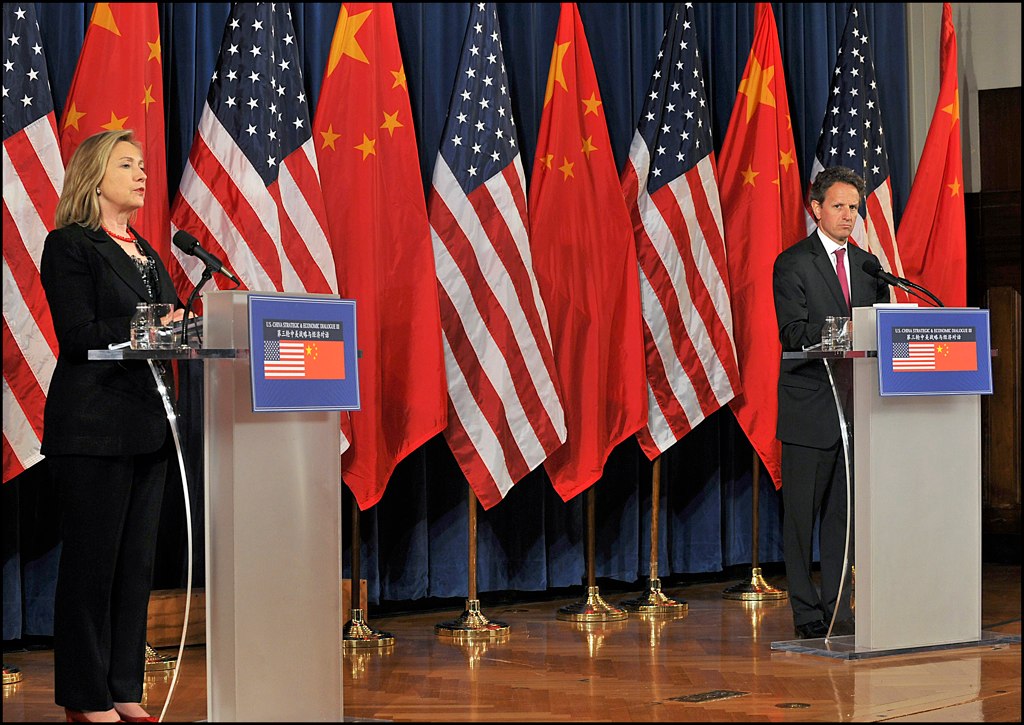
"The truth is that, while there are a few more restrictions on what the clowns on Wall Street can do, Americans are not better off than they were a year ago before the magical everything-proof shield was signed into law.  Banking is still highly unstable in the country, and the banks still exist as entities only because they were artificially revived in the form of massive bailouts.  All across the political spectrum, Americans are angry that the massive bailouts ever happened, and they haven’t forgotten that this bailout, spearheaded by Treasury Secretary Tim Geithner (who was present at the appointment ceremony for the head of the CFPB), happened under President Obama’s watch and he failed to take action against it."

Banking will never be stable in America until the Federal Reserve, whose hands are in every cookie jar, from Chase and Wells Fargo to your community bank, is fully audited and eventually dissolved, and the farce of fractional reserve banking is done away with.

Fractional reserve banking is one of the key factors causing the Great Depression.  Many people don’t know this, but the amount of money printed on their bank account statement is NOT the amount of money that exists in their community bank vault.  The standard reserve requirement for larger banks set by the Federal Reserve is ten percent,[1] meaning out of every hundred dollars a person saves in the bank, only ten of those dollars actually have to exist in a vault.  This system is a bridge of thin ice, since theoretically only ten percent of a bank’s customers need to take out all of their money in order for the bank to run out of money and close down (the true meaning of bankruptcy).

Economist Murray Rothbard makes a compelling case that fractional reserve banking goes hand-in-hand with inflation,[2] since the only way to account for the ninety percent of a bank’s money that doesn’t exist is to hastily print paper money, and printing more money further devalues the American dollar (this is exactly why America needs to return to the gold standard[3]).


The image used is artwork by the author.  It was compiled from various images from Wikimedia Commons as well as text added by the author.


[1] http://www.federalreserve.gov/monetarypolicy/reservereq.htm
[2] Rothbard, Murray. “Take Money Back.”
[3] Paul, Ron. Gold, Peace, and Prosperity.  The Foundation for Rational Economics and Education. Pp. 31-32, 39

Wednesday, June 1, 2011

Get the REAL Facts about Raising the Debt Limit

By Zach Foster

A recent press announcement from the Federal Reserve would lead Americans to believe that failing to raise the debt limit “would have catastrophic economic consequences.”  Despite the glossiness that the economists hired by the Federal Reserve Board of Governors that might make a “slight increase” seem like a sensible thing to do, and even downright responsible, IT IS NOT TRUE.  Failing to raise the debt limit would not have catastrophic consequences at all.  Any “catastrophe” appearing to result from suspension of payments by the federal government for salaries or operations that would occur, if Congress took the high road and enforced it this time, would NOT be a consequence of enforcing the debt limit; any and all catastrophe would be consequences of the last seventy-eight times the debt limit was raised.

The federal government cannot continue to incur debt any longer, especially at the rate of eleven trillion dollars of debt incurred under the Obama administration.  If things aren’t going to be paid for, then it is up to Congress to cut federal expenditures and to do so immediately.  Congressman Ron Paul (R-TX) has repeatedly recommended across-the-board cuts so that all expenditures are affected equally.  Yes, it will be painful, but it has to be done.  Someday large portions of the national debt may be called in by the loaners (foreign banks and foreign governments), and America’s inability to pay will make hundred dollar bills useful only as fuel for fires and toilet paper for private-area hygiene.

Congressman Paul has also repeatedly called for the abolition of the Federal Reserve, because the existence of that entity is parasitic to the national economy and only grows the federal debt.  The Fed wants the federal government debt to grow.  Some might ask why anyone would want this.  The answer they seek is that the Federal Reserve is a bank that loans money out, even to the federal government, and the Fed is running quite a racket.  Every dollar that the federal government speaks into existence and is printed or minted by the Treasury Department is actually being loaned to the federal government by the Federal Reserve, and the Fed charges interest.  Therefore, not only is it bad enough that the constant printing of money makes the dollar worth even less, but the government is already in debt to a bank before it even gets to print its own money.  The amount owed is ever increasing, since interest rates accumulate and compound the balance owed.

The debt limit has been raised seventy-eight times since the year 1960, which means this willful self-impoverishment has only gone on for sixty-one years.  If the country managed to survive 184 years without greatly raising the debt ceiling, then it can manage going more time without allowing greater debt.

Get the Facts: Raising the Debt Limit

A Press Announcement from the Federal Reserve

The debt limit is the total amount of money that the United States government is authorized to borrow to meet its existing legal obligations, including Social Security and Medicare benefits, military salaries, interest on the national debt, tax refunds, and other payments. The debt limit does not authorize new spending commitments. It simply allows the government to finance existing legal obligations that Congresses and presidents of both parties have made in the past.  

Failing to increase the federal debt ceiling would have catastrophic economic consequences. It would cause the government to default on its legal obligations – an unprecedented event in American history. That would precipitate another financial crisis and threaten the jobs and savings of everyday Americans – putting the United States right back in a deep economic hole, just as the country is recovering from the recent recession.  

Congress has always acted when called upon to raise the debt limit. Since 1960, Congress has acted 78 separate times to permanently raise, temporarily extend, or revise the definition of the debt limit – 49 times under Republican presidents and 29 times under Democratic presidents.  In the coming weeks, Congress must act to increase the debt limit. Congressional leaders in both parties have recognized that this is necessary.